September 23 – November 30, 1944
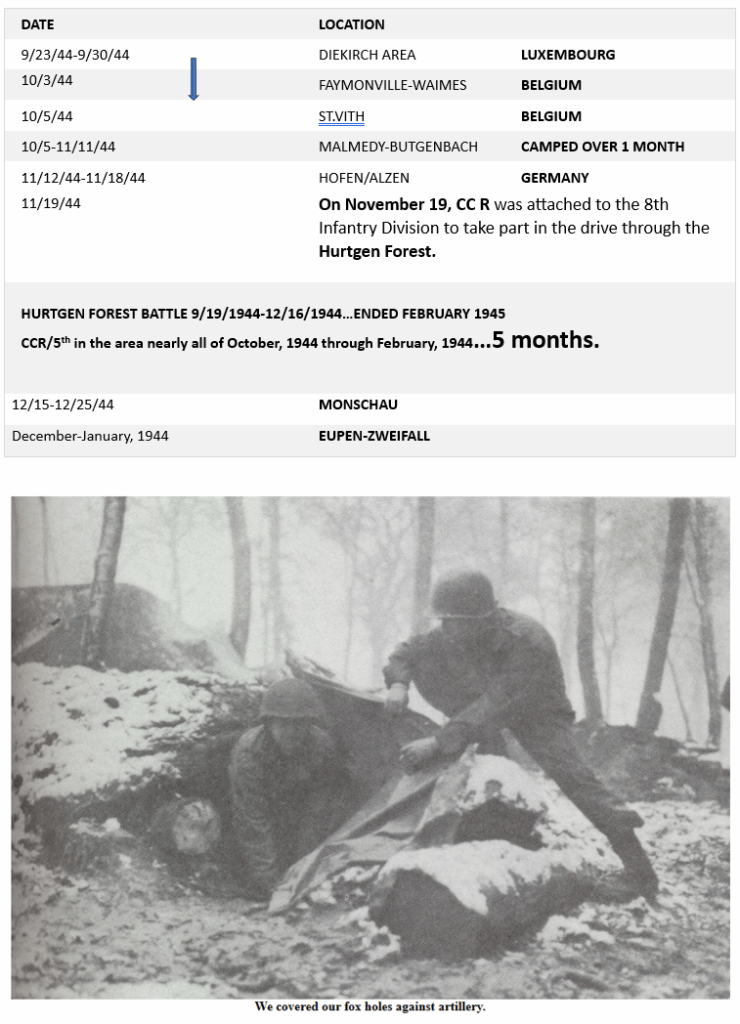
After retreating from the Wallendorf area the 5th Division settled down in the Diekirch area; its activities during the remainder of September were restricted to patrolling the border from Rodershausen on the north to Bollendorf, which is four miles south of Wallendorf. Fifth Armored men knew for certain that they were in for a winter campaign when, on 28 September, a convoy of 80 trucks left on the long trip to Normandy to pick up the duffel bags which contained each man’s winter clothing.
On October 3, 1944 the Fifth Armored then rolled north about 40 miles to the Faymonville-Waimes-Butgenbach area in Belgium.
On October 23rd, CC R’s 47Th Infantry Bn. moved into the 5,000-yard front and set up 27 observation posts. On November 19, CC R was attached to the 8th Infantry Division to take part in the drive through the Hurtgen Forest.
 General Dwight D. Eisenhower said that veterans who participated in the Battle of the Hurtgen Forest place that struggle at the top of their list of hard fighting. Without hesitation men of the Fifth Armored put that ordeal at the head of their list. The month in the Hurtgen Forest was the darkest period in the division’s combat history.
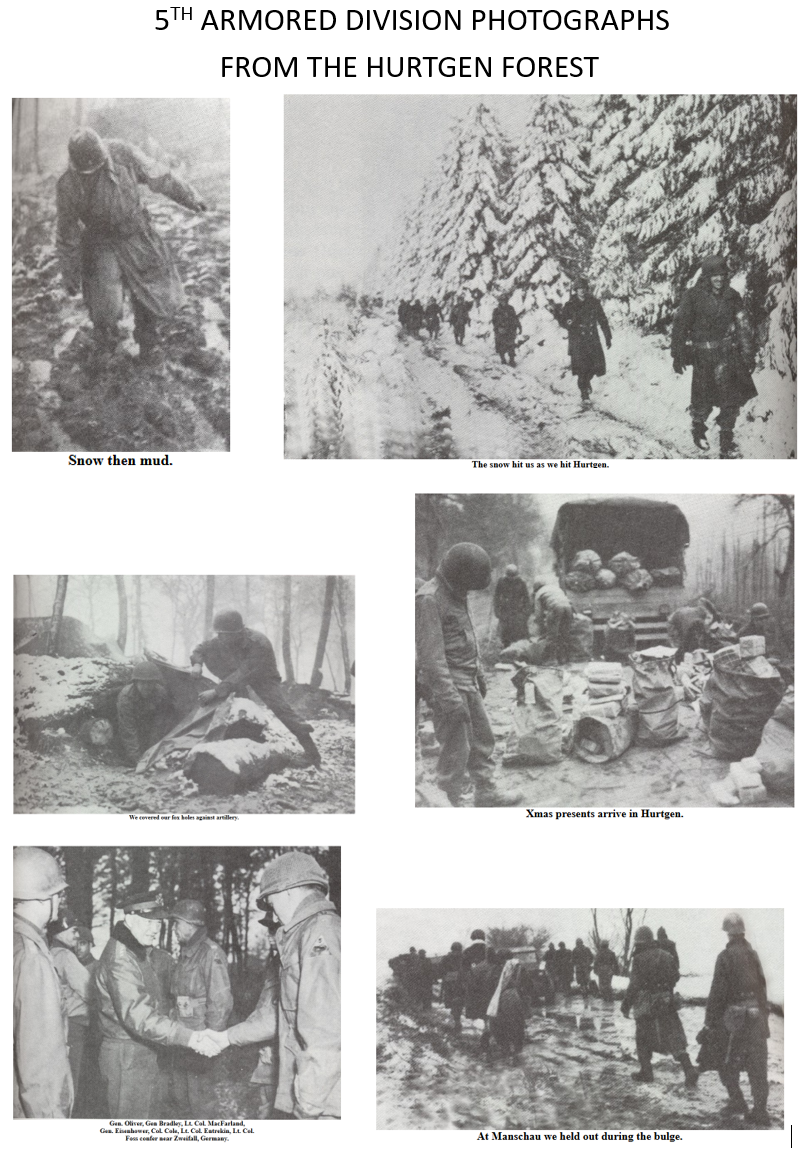
In this dense and somber forest of pine, men battled snow and mud and frigid weather as well as an entrenched and fiercely resolute enemy, were prevented from maneuvering or deploying by the trees, the mud, the ravines and the extensive mine fields. Advances, therefore, had to be made in bitter yard-by-yard struggles against the well-placed Germans who fought here with savage tenacity. The attackers were subjected to tremendous concentrations of artillery and mortar fire directed from observation posts on high ground, across the Roer River. Foxholes offered little protection since the shells burst in the tree tops and sprayed the ground below with their fragments.
Page 26
After each long, miserable and sleepless night spent in the icy foxholes, men numb from the cold climbed out at dawn to begin another attack. As they pushed forward through the thickly sown mine fields, the bursting shells and sniper fire, they watched their numbers dwindle. Each gain of a few yards exacted a frightful price in dead and wounded. And to the collecting stations in the rear flowed the heartbreaking procession of the wounded, some walking and the others on litters.
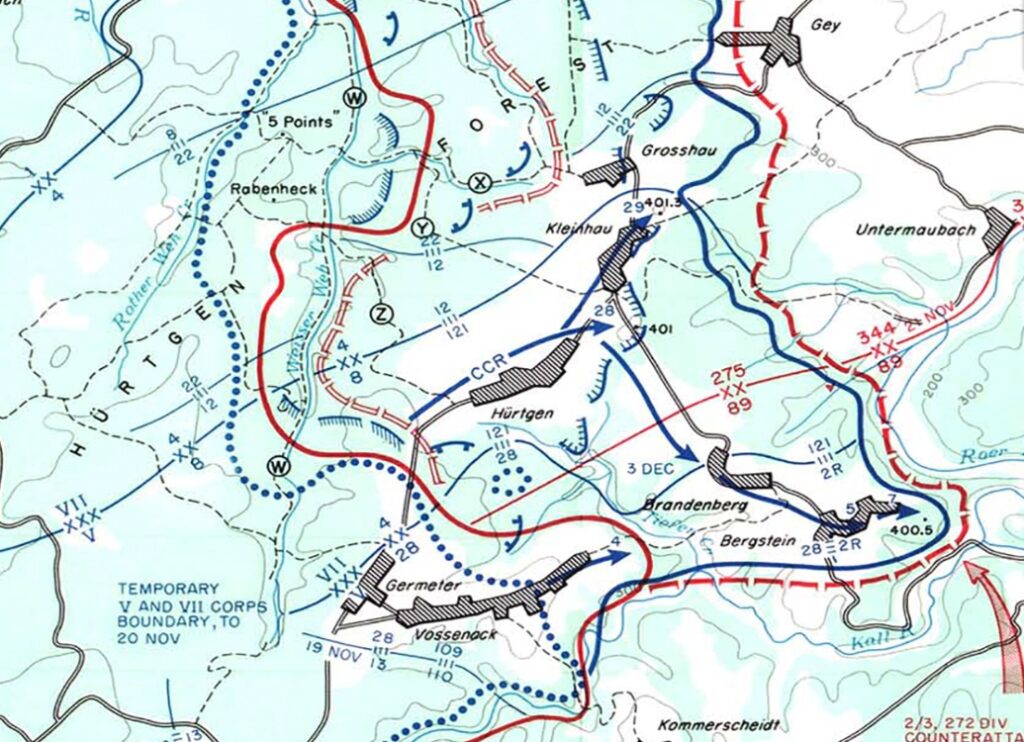
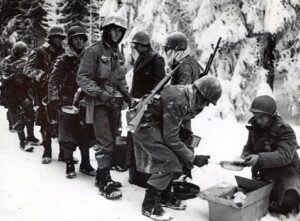 The night of 24 November, 1944, was cold, black and rainy. Combat Command R started into the Hurtgen Forest. The mission was to take the German town of Hurtgen. The 95th Armored Field Artillery Bn. had gone into position five days earlier. First company to move was B Co. of the 47th Armored Infantry Bn., The infantrymen moved out of Rotgen in their halftracks, leaving their married B Co. of the 10th Tank Bn, behind, Too great a concentration of armor, it was felt, would attract heavy artillery fire. The Germans had sown the area heavily with schu and anti-personnel mines and almost immediately explosions and cries for “Medics!” filled the forest. At dawn the Germans began to pour in more and more artillery. Small arms fire increased. Casualties skyrocketed, and when the tanks arrived at the jump-off point at their scheduled time, 0730, the infantry company was badly battered.
Estimated Total Casualties – Hürtgen Forest
Side | Total Casualties | Killed | Wounded | Missing / Captured |
United States | 33,000–55,000 | 12,000 | 24,000 | 9,000 |
Germany | 28,000–35,000 | 12,000 | 20,000 | 3,000 |
Just a few miles south of the Fifth Armored’s positions the Germans launched more than 400,000 personnel, more than 1,400 tanks and armored vehicles, 2,600 pieces of artillery, and more than 1,000 combat aircraft directly at a 75-mile (120 km) stretch of the front in the Ardennes in an offensive designed to punch through the Allied lines.
Meanwhile, the Fifth Armored’s combat commands to be committed in the Hurtgen struggle was CC R; it pushed toward the town of Hurtgen and then took Kleinhau, Brandenberg, and Bergstein. Near the end of November CC A entered the fray a little further to the north and nearer to the Roer River; it attacked through Gey, Horm and Kufferath to the banks of the river. CC B, which came into the fight in early December, also made for the river; it attacked through the towns of Langenbroich, Bergheim and Bilstein. After it completed its mission in the Hurtgen Forest, the Fifth Armored was pulled back into Belgium to help block the Germans’ drive toward Liege during the Battle of the Bulge.
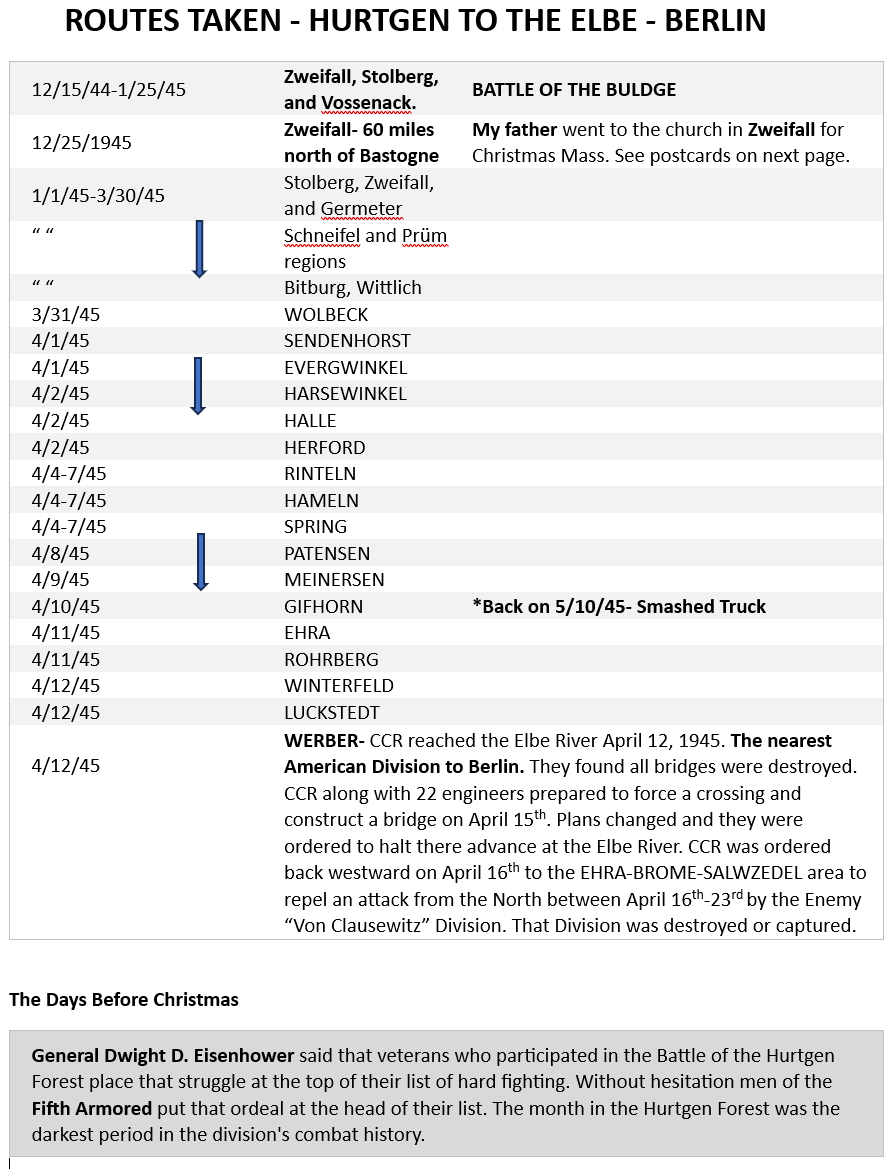
The 5th Armored Division, including its Combat Command Reserve (CCR), played a key supporting and flanking role during the Battle of the Bulge (Dec 16, 1944 – Jan 25, 1945), though it was not in the direct path of the initial German offensive. Here’s a breakdown of their involvement:
Context Before the Bulge:
While the Fifth Armored was fighting its way through the Hurtgen Forest and across the approaches to the Roer River, the Germans on 16 December began their last desperate attempt to attain victory on the Western Front.
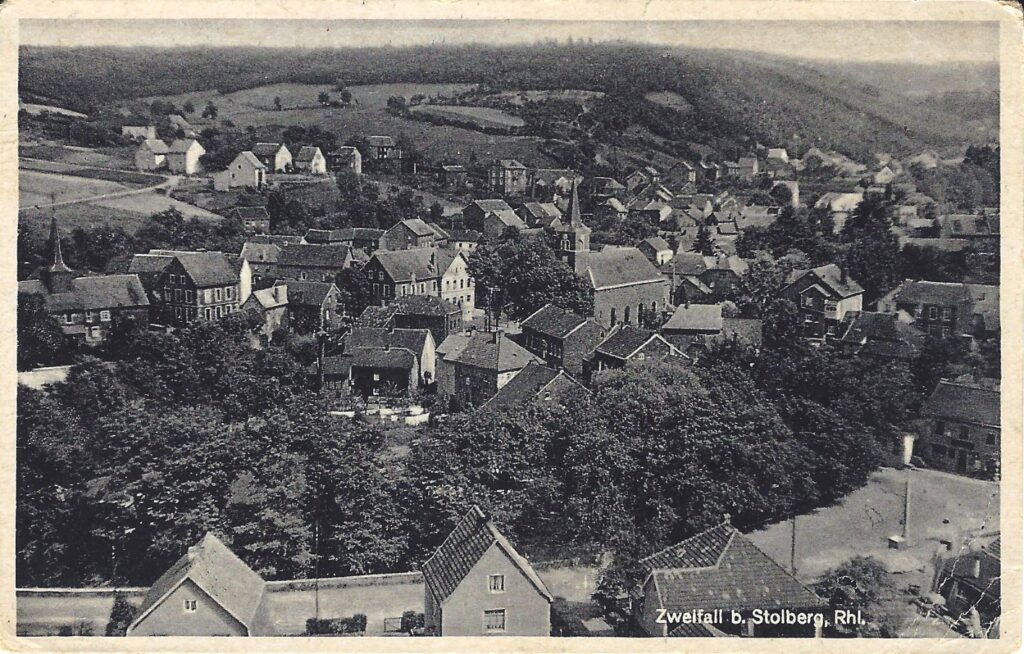
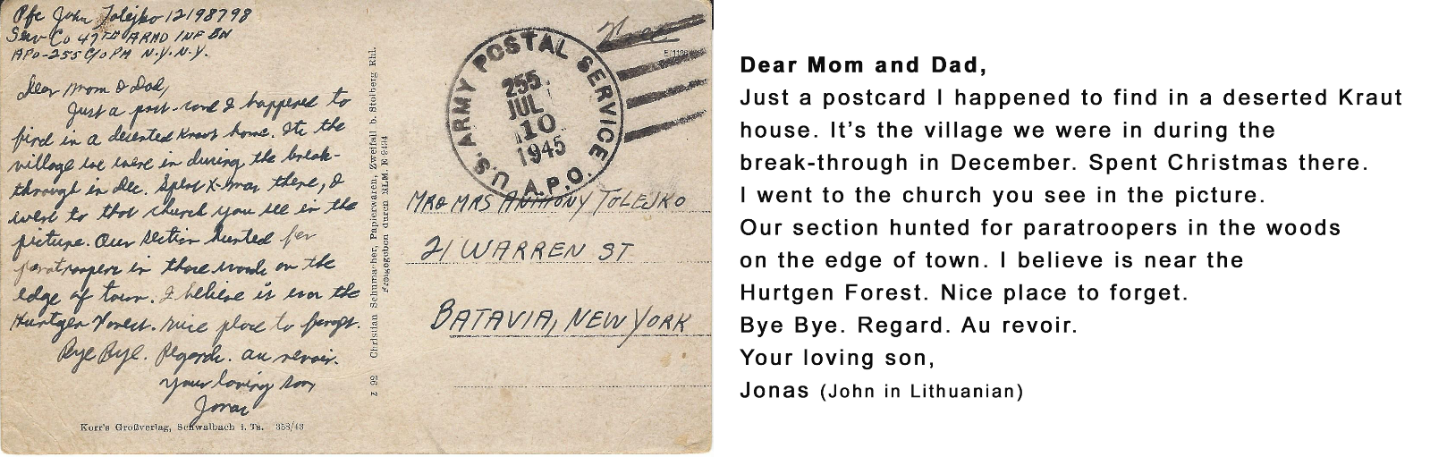
Most of the correspondence between my father and his parents was in Lithuanian. Luckily this time he used English. Here is his message.
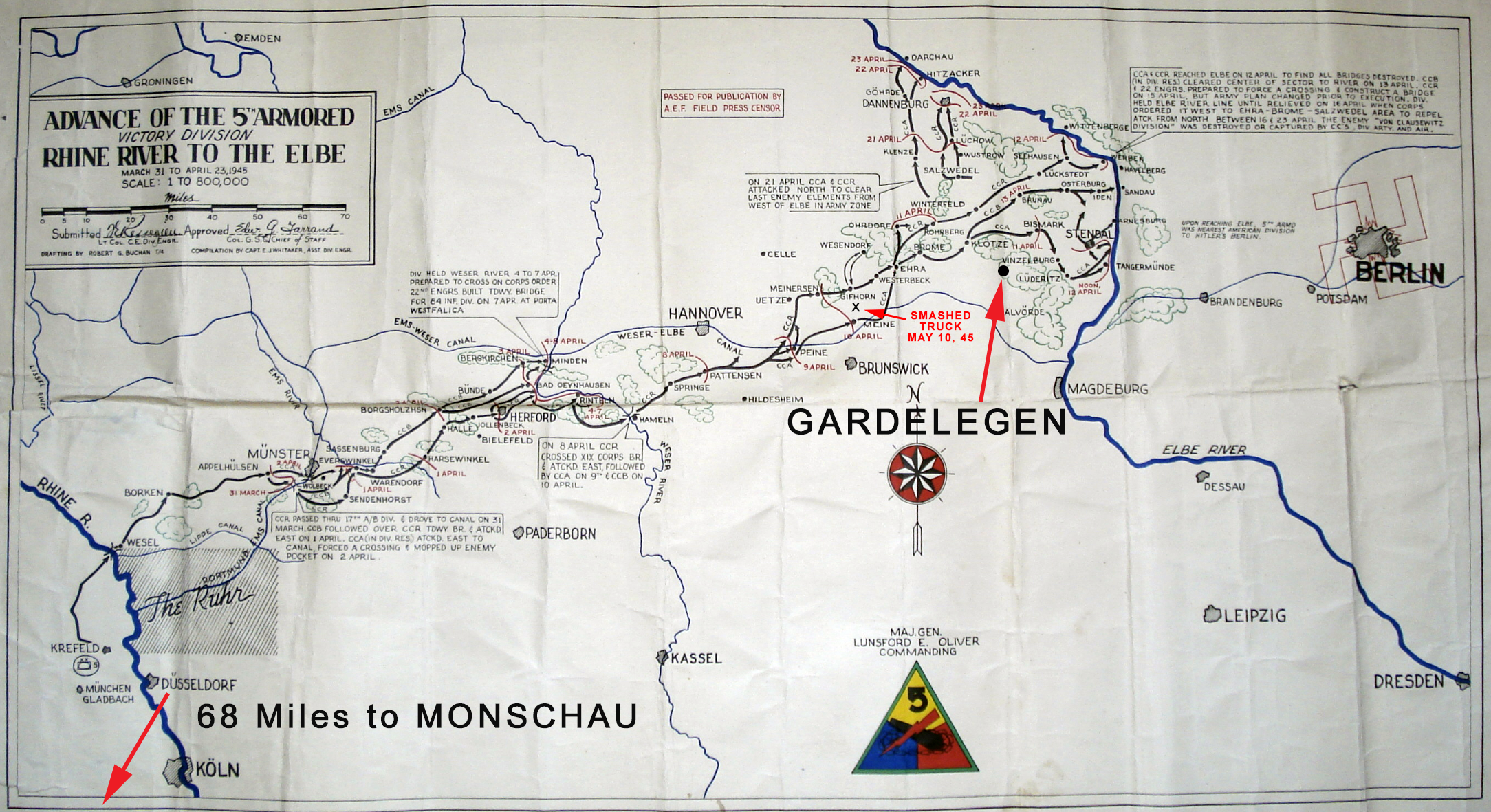
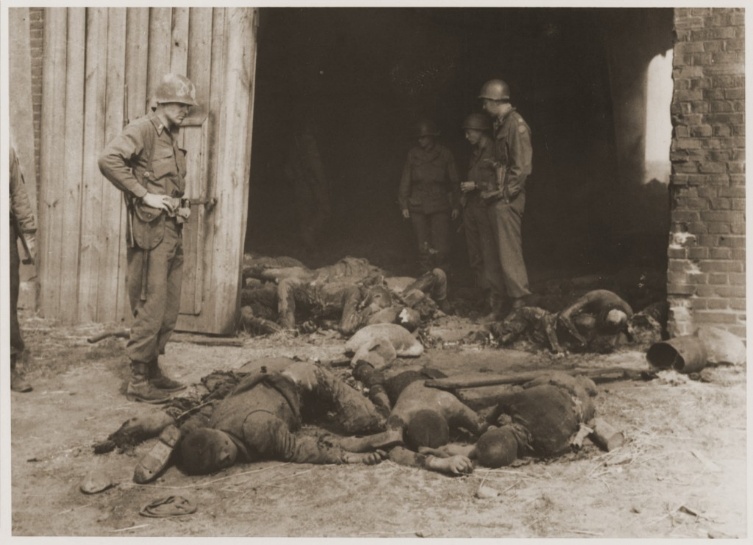
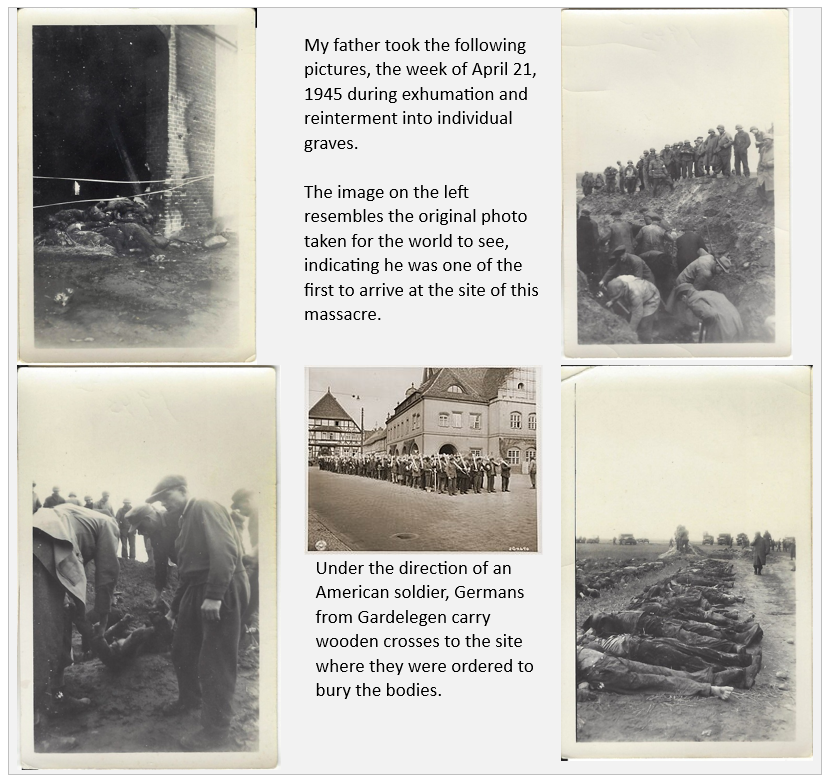
Within days, US Army Signal Corps photographers arrived to document the Nazi crime and by April 19, 1945, the story of the Gardelegen massacre began appearing in the western press. On that day, both the New York Times and The Washington Post ran stories on the massacre, quoting one American soldier who stated: “I never was so sure before of exactly what I was fighting for. Before this you would have said those stories were propaganda, but now you know they weren’t. There are the bodies and all those guys are dead.”